
When PPS Coordinators Are Expected to “Just Know” ICD-10-CM
In many Inpatient Rehabilitation Facilities (IRFs), PPS Coordinators play a critical role in reimbursement, compliance, and audit readiness. They influence principal diagnosis selection, comorbidity tiering, and the accuracy of the IRF-PAI — all factors that directly affect payment.
Yet one reality continues to surface across facilities nationwide:
Many PPS Coordinators are expected to understand ICD-10-CM coding without ever receiving formal coding education.
The Hidden Gap in IRF Training
PPS Coordinators are not coders — and they are rarely trained as such.
Still, they are routinely asked to:
- Review and question code selection
- Communicate with coding and CDI teams
- Defend documentation and diagnosis choices
- Understand how coding decisions impact CMGs, tiers, and payment
When that foundational coding knowledge is missing, PPS staff are often left to figure things out on their own.
That’s when the workarounds begin.
When “Googling It” Becomes the Only Option
We hear this frequently from IRF professionals:
“I didn’t know who to ask — so I Googled it.”
The problem?
Google isn’t built for IRFs. Generic coding articles, non-IRF forums, and outdated guidance rarely address:
- IRF-specific coding nuances
- Tier comorbidity rules
- Interdisciplinary documentation alignment
- How coding decisions affect IRF-PAI payment
The result is uncertainty — and risk.
Why This Matters More Than Many Facilities Realize
In our audit work at AQ Consulting, we consistently see how gaps in coding understanding contribute to:
- Missed tier comorbidities
- Incorrect principal diagnosis selection
- Documentation that doesn’t fully support severity
- Payment-impacting errors and audit exposure
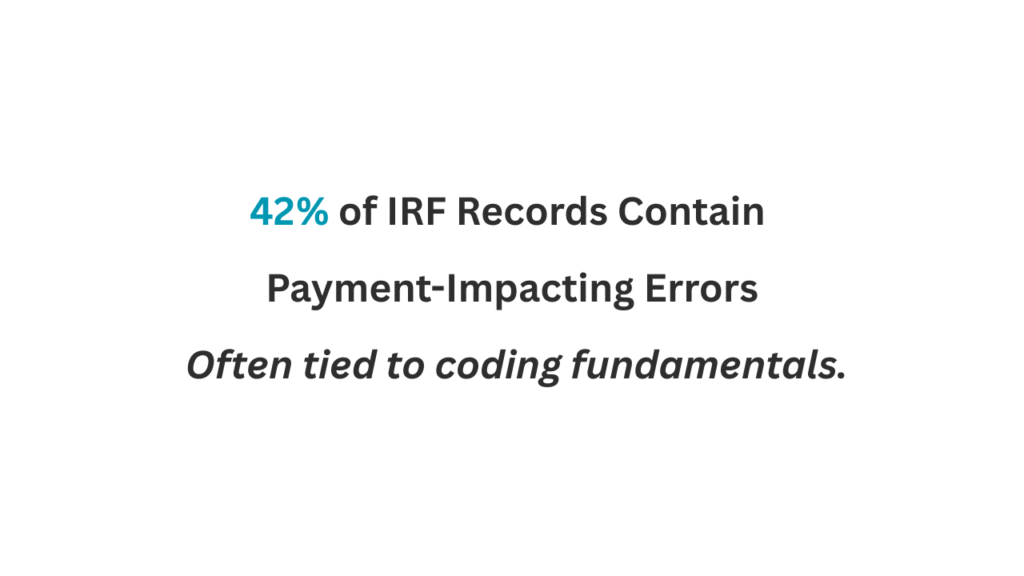
In a multi-year audit sample across 50 IRFs, 42% of reviewed records had errors that affected payment — often tied to documentation and coding alignment issues.
These are not isolated mistakes. They are system-level training gaps.
Education Is Revenue Protection
The solution isn’t expecting PPS Coordinators to become certified coders.
The solution is targeted, IRF-specific coding education that helps PPS staff:
- Understand ICD-10-CM structure and intent
- Communicate more effectively with coding and CDI teams
- Recognize when documentation does — and does not — support code selection
- Make more confident, defensible decisions that protect reimbursement

That’s why we created the ICD-10-CM Coding for PPS Coordinators Virtual Course — designed specifically for IRF professionals who influence coding outcomes but were never trained in coding fundamentals.
One Improved Case Can Change the Math
For many facilities, the cost of focused education can be offset by just one improved case:
- One accurately tiered comorbidity
- One corrected principal diagnosis
- One avoided denial or recoupment
When PPS staff are equipped with the right knowledge, the return on investment becomes clear — quickly.
Moving From Guesswork to Confidence
IRF reimbursement is too complex — and too high-stakes — to rely on guesswork or internet searches.
When PPS Coordinators understand how coding truly works in the IRF setting, facilities benefit from:
- Stronger interdisciplinary alignment
- More accurate IRF-PAIs
- Reduced audit risk
- Greater confidence across the revenue cycle
If your team has ever felt unsure, unsupported, or forced to “figure it out as they go,” that’s not a failure — it’s a signal that education is needed.
And the right education can make all the difference.

Learn more about ICD-10-CM Coding for PPS Coordinators
Or
Contact us to discuss training options for your IRF team
For ongoing IRF-specific support, learn about out IRF Revenue Warriors membership.
If you enjoyed this, please consider sharing it!

